
Every New Year, I see the same pattern. People begin January with strict rules. No rice. No roti. No sugar. No eating after a certain time. A few weeks later, they feel tired, irritated, and confused about food.
The problem is not discipline. The problem is that most diet plans are disconnected from real Indian lives and real bodies.
A sustainable diet is not about eating less. It is about eating in a way your body feels safe, nourished, and supported. When that happens, health follows naturally.
This approach reflects what I share with clients through my consultations as a dietitian in Chandigarh, where the focus is always on sustainability, digestion, and real Indian meals rather than rigid diet rules.
Start by giving your body a routine
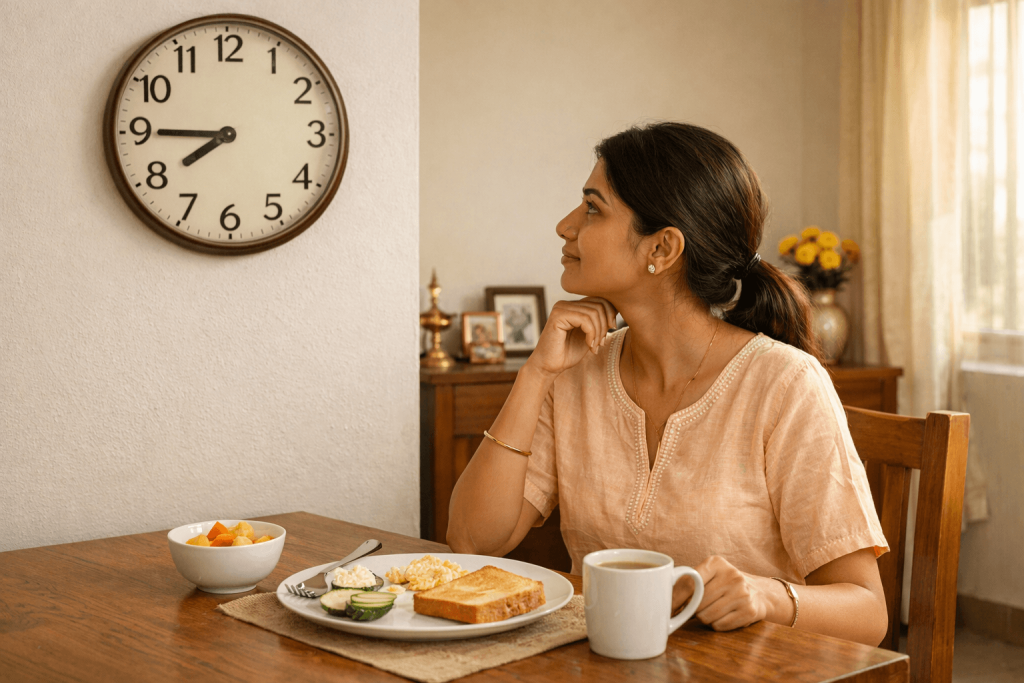
Before changing what you eat, fix when you eat. Irregular meals, long gaps, and skipping meals put the body under stress. This directly affects digestion, hormones, cravings, and mood.
Try to eat three proper meals and one or two light snacks at roughly the same time every day. When the body gets food on time, it stops panicking. Hunger becomes predictable, and overeating reduces on its own.
Whether you are working with a nutrition professional in person or learning through an online nutrition course, building a consistent meal routine is often the first and most impactful step toward better health.
Breakfast should calm your system
Many people either skip breakfast or grab tea and biscuits. This sets off blood sugar swings that affect energy and focus for the rest of the day.
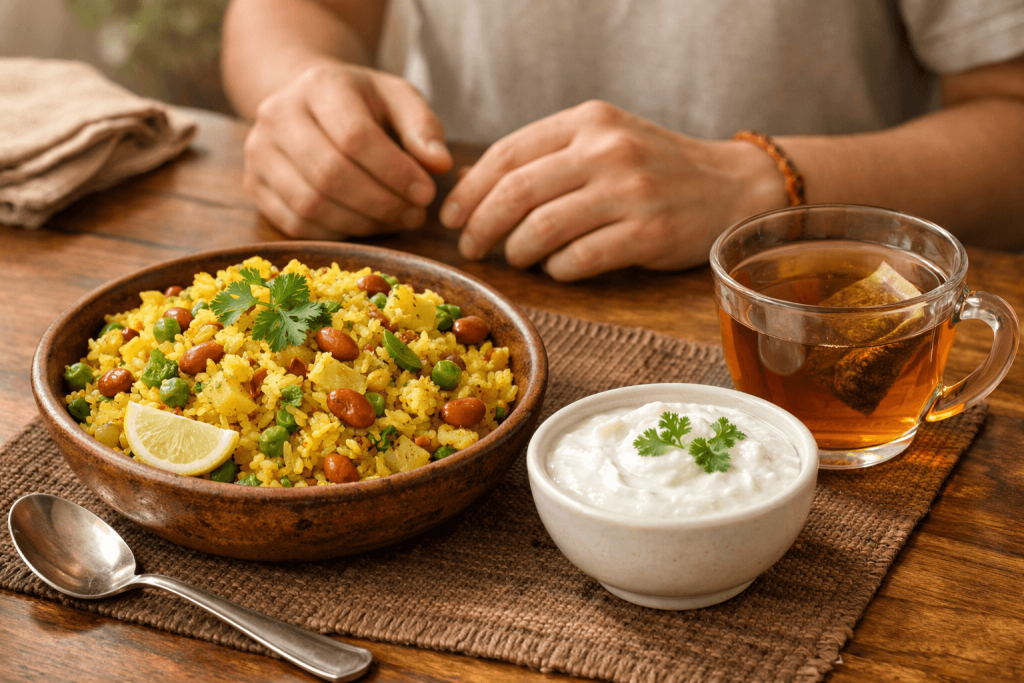
A good breakfast should include protein, fibre, and some fat. Vegetable poha with peanuts, paneer or tofu paratha with curd, vegetable omelette, idli with extra sambar, or even leftover dal and roti are all perfectly fine. There is no perfect breakfast. There is only a balanced one.
Lunch is the anchor meal
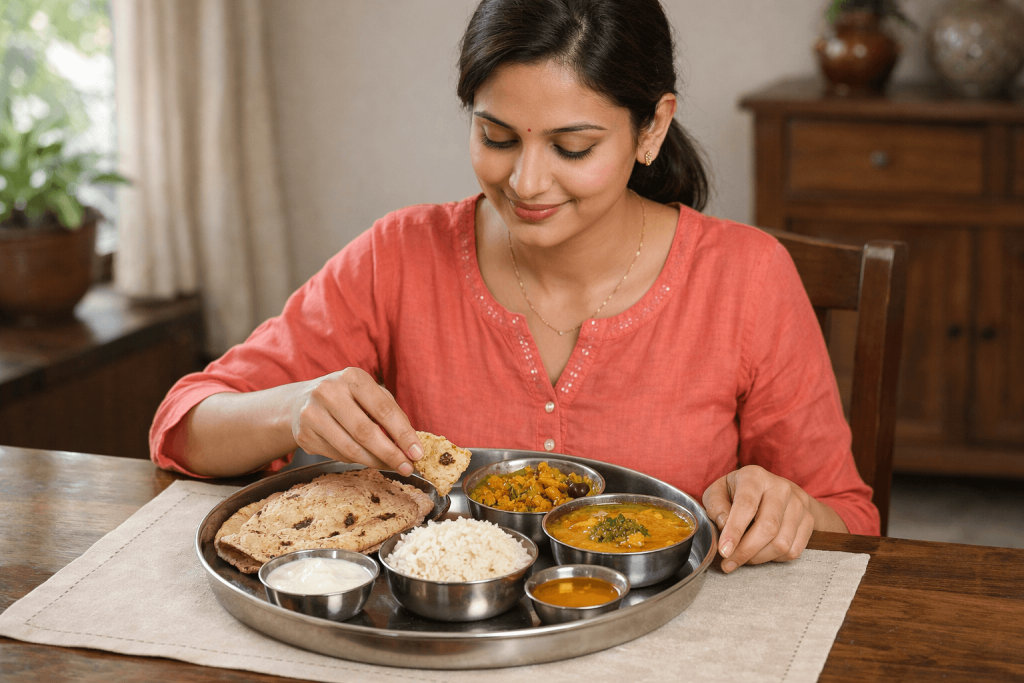
Lunch should be the most grounding meal of the day. Skipping or rushing through lunch often leads to evening cravings and heavy dinners.
A simple Indian thali works best. Roti or rice, a protein like dal, rajma, chole, paneer or curd, seasonal vegetables, and a little ghee or oil. Eat calmly, without screens. Digestion begins when the mind feels relaxed.
Dinner should support rest and recovery
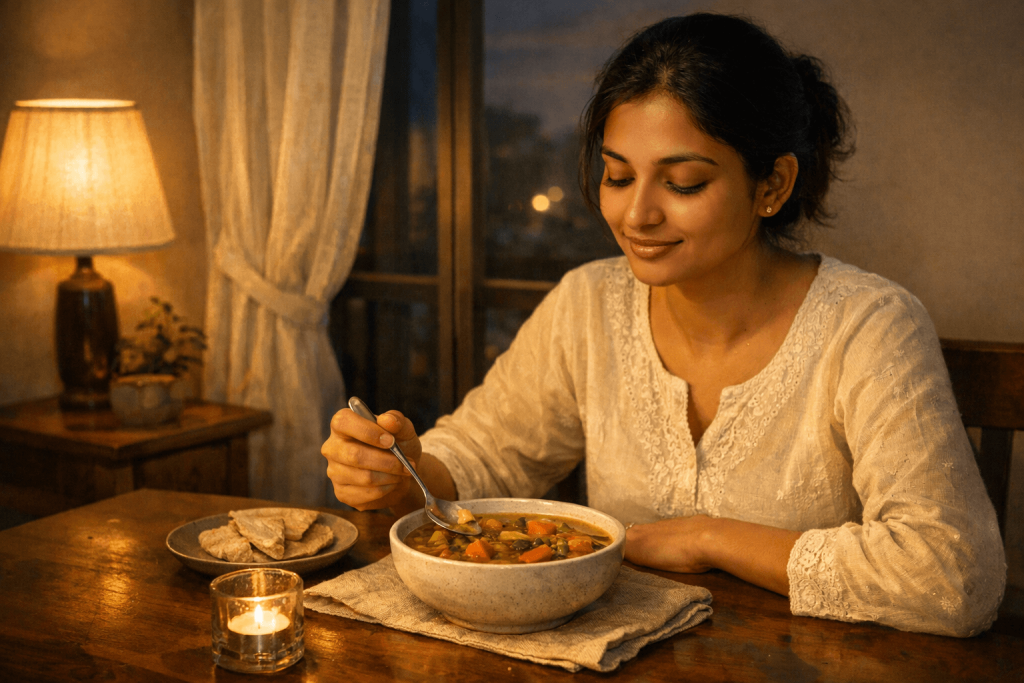
Heavy dinners disturb sleep, digestion, and metabolism. Dinner does not need to be elaborate. It needs to be lighter than lunch and eaten early enough.
Vegetable soups with paneer, khichdi with vegetables and ghee, sautéed sabzi with one roti, or curd-based meals suit most people. Finish dinner at least two to three hours before bedtime.
Protein is essential, especially for women
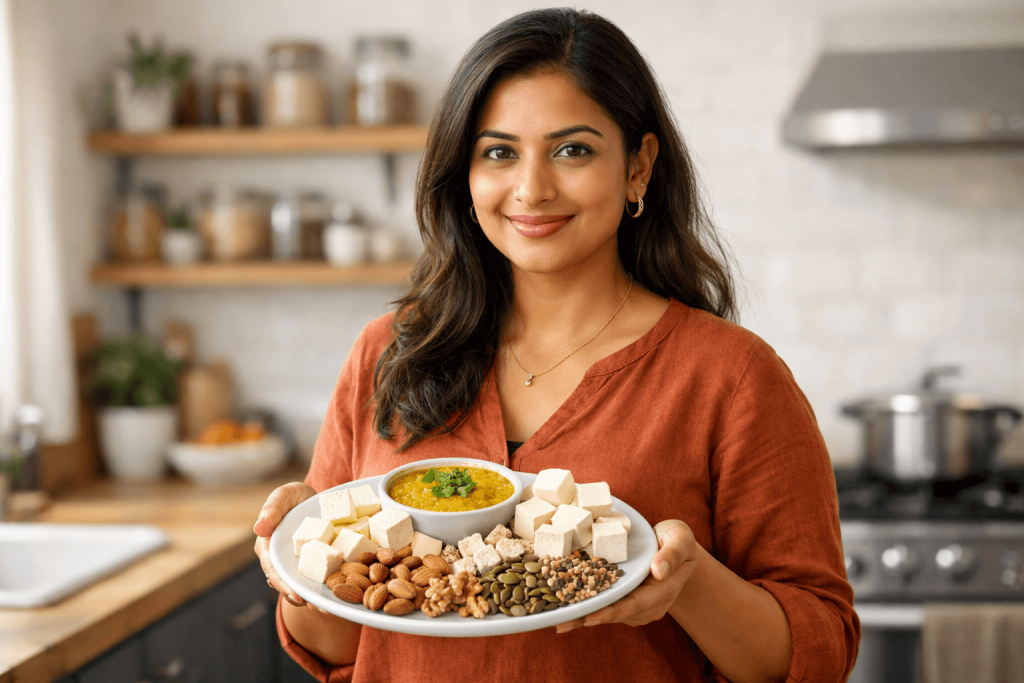
Low protein intake is one of the most common issues I see. Protein is not just for weight loss. It is crucial for muscle strength, hormonal balance, immunity, and energy.
As a nutritionist, this is one of the most common gaps I see among women across India, which is why personalised guidance from an experienced dietitian can make a meaningful difference.
Vegetarian sources include dals, legumes, paneer, curd, milk, tofu, nuts, and seeds. Non-vegetarians can add eggs, fish, or lean meat. Every meal should have a clear protein source.
Digestion is the foundation of health
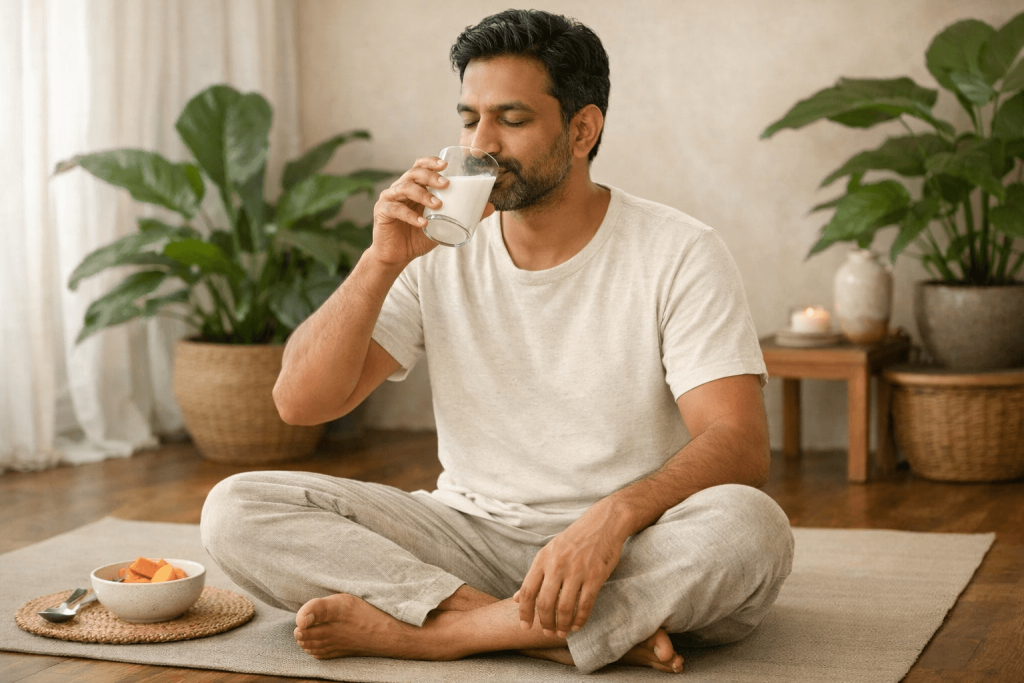
If you are constantly bloated, acidic, constipated, or tired after meals, the body is asking for gentler care.
Eat slowly, chew well, avoid eating while scrolling, and limit raw or cold foods at night. Warm, freshly cooked meals are easier on the gut. Simple fermented foods like curd or buttermilk can help when taken in moderation.
Many people also benefit from complementary practices like yoga classes in Chandigarh, especially those focused on digestion, stress reduction, and nervous system balance.
Stop fearing food
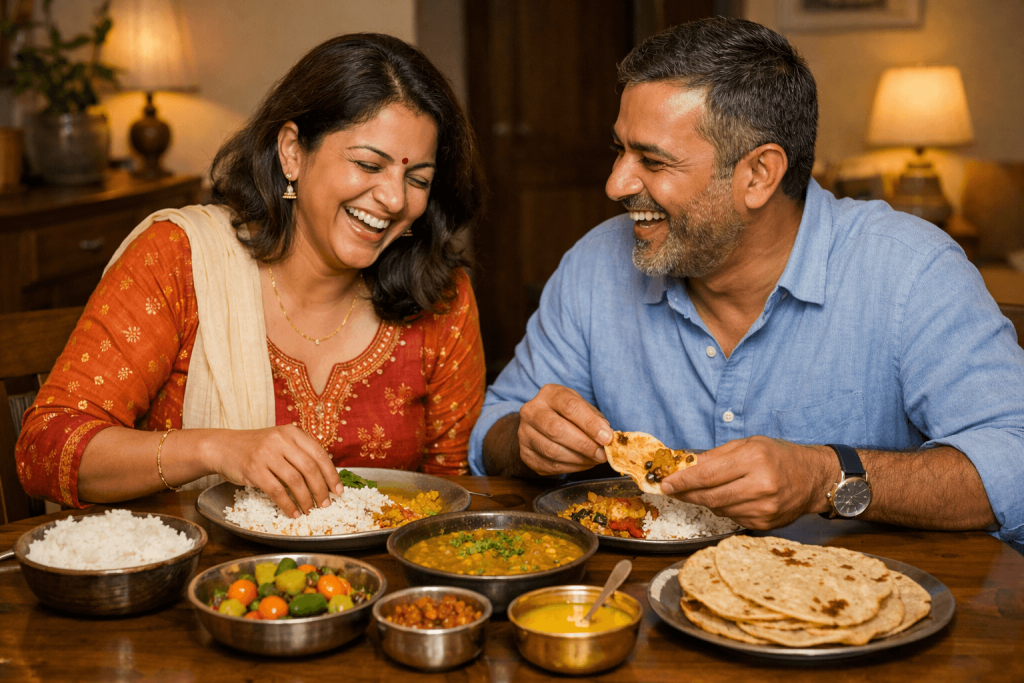
Rice, ghee, dairy, and sugar are not the problem. The problem is excess, poor timing, and stress around food. When people start trusting food again, the body responds positively.
A healthy diet allows space for festivals, family meals, and comfort foods. Health should feel supportive, not restrictive.
One simple Indian meal plan
This is a guide, not a rulebook.
- Morning:Warm water or herbal tea
- Breakfast:Vegetable poha with peanuts and curd
- Mid-morning:One seasonal fruit
- Lunch:2 rotis or small bowl of rice, dal or rajma, seasonal sabzi, salad, little ghee
- Evening:Roasted chana, nuts, or buttermilk
- Dinner:Vegetable soup with paneer or khichdi with vegetables
- Before bed:Optional turmeric milk if digestion permits
Think beyond 30 days
Your body is not broken. It does not need punishment. It needs consistency, nourishment, and patience.
The best New Year diet is one that supports your digestion, hormones, energy, and peace of mind. When food starts working with your body, wellness becomes effortless and long-lasting.